
Gas carts have a different winter problem to electric ones. It is almost entirely about fuel.
1. Deal with the fuel, this is the important one
Pump gas with ethanol in it starts breaking down in about thirty days. What it leaves behind is a varnish that plugs the small passages in a carburetor, and that is the single most common reason a gas cart will not start in April.
That thirty days is the number to hold onto, because a cart in the Flathead sits from about October to about April. Six months. You are asking fuel to sit six times longer than it stays good, through a winter that swings the tank through condensation cycles the whole way. Untreated fuel does not survive that, and the spring bill is a carburetor clean rather than a five dollar bottle of stabilizer.
Two approaches, either works:
Stabilize it. Add fuel stabilizer to the tank, then run the engine ten to fifteen minutes so treated fuel actually reaches the carburetor. Stabilizer sitting in the tank while untreated fuel sits in the carb does nothing useful. Fill the tank most of the way while you are at it, since less empty space means less condensation.
Or drain it. Shut the fuel off and run the engine until it dies. This is more thorough but you have to genuinely empty the carburetor, not just the tank.
Doing neither is the option that costs money.
2. Leave the oil until spring
You will read elsewhere that you should change the oil going into storage. Jared does it the other way round, in the spring, as part of the startup service.
The reason is simple: fresh oil that then sits for six months is not much better off than the oil already in there, and doing it in spring means the cart starts the season on genuinely clean oil rather than oil that has spent the winter sitting. If your cart is on a seasonal package, this is already covered and there is nothing for you to do.
3. The battery still matters
Gas carts have a starting battery and it will self discharge over the winter, then freeze if it gets low enough.
Worth knowing where "low enough" actually is. Fully charged, that battery is good to about 92 below and nothing in Montana touches it. Down at about 40 percent it freezes at roughly 16 degrees, and Kalispell's average January low is just under 15. A neglected starting battery does not need a cold snap to freeze here. It only needs an average January.
Either pull it and keep it somewhere above freezing on a maintainer, or leave it in with a tender on it.
4. Spark plug and air filter
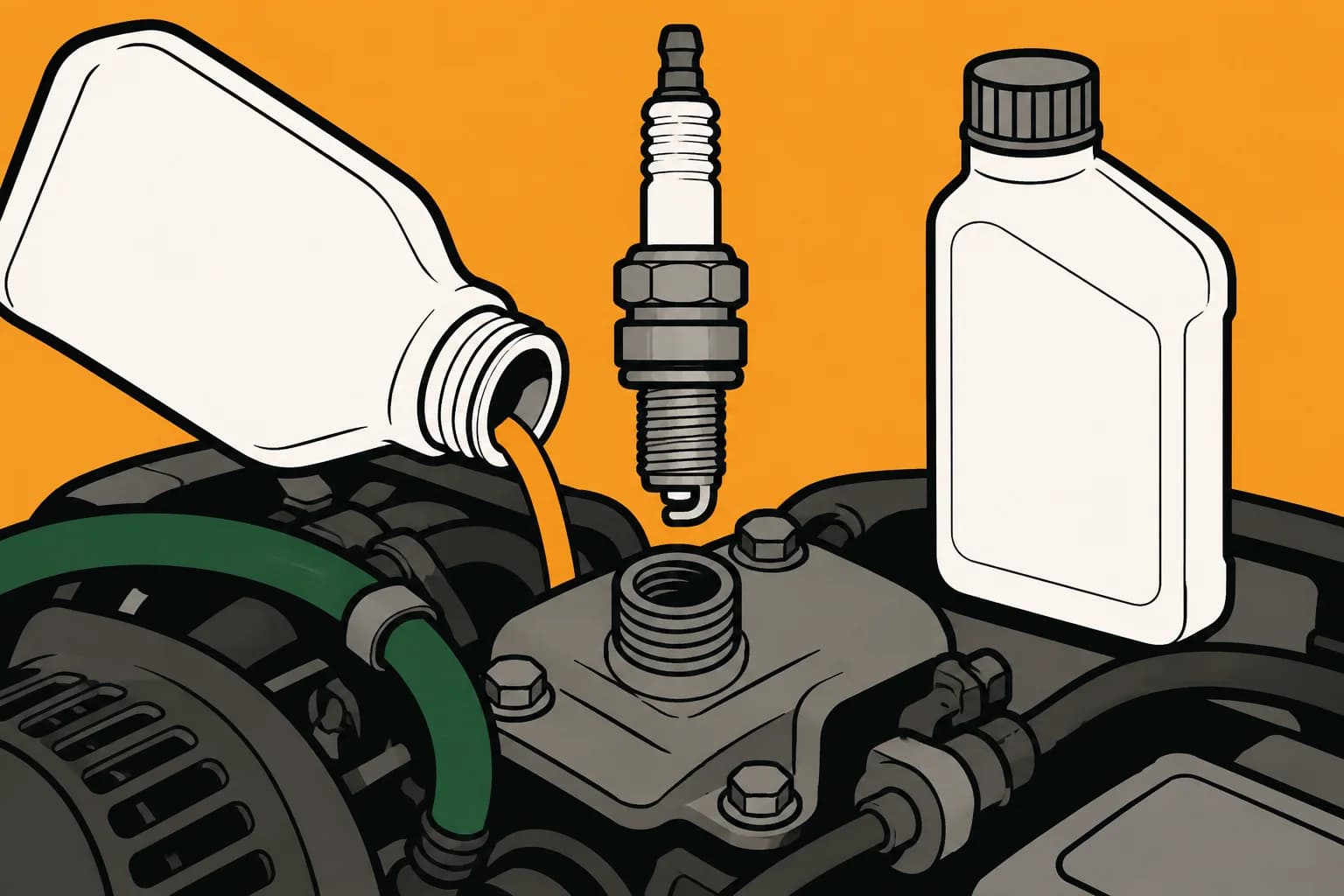
Pull the plug, look at it, and replace it if it is worn or fouled. While it is out, a small squirt of oil into the cylinder and a couple of turns of the engine coats the bore against corrosion.
Check the air filter. If it is filthy now it will still be filthy in April.
5. Tires, mice, cover
Same as an electric cart. Air the tires to spec so they do not flat spot. Steel wool in the exhaust outlet and dryer sheets under the seat for the mice, and on a gas cart specifically check the air box, which mice love. Cover it but leave airflow.
6. Park it sensibly
Out of the weather, off the dirt, on a hard surface if possible.
Come spring
Expect it to need a minute of cranking to pull fuel through. If it fires and then dies repeatedly, or will not fire at all, the fuel almost certainly went off and the carburetor needs cleaning.
That is a routine job. Call 406.270.9346 and Jared will sort it.