
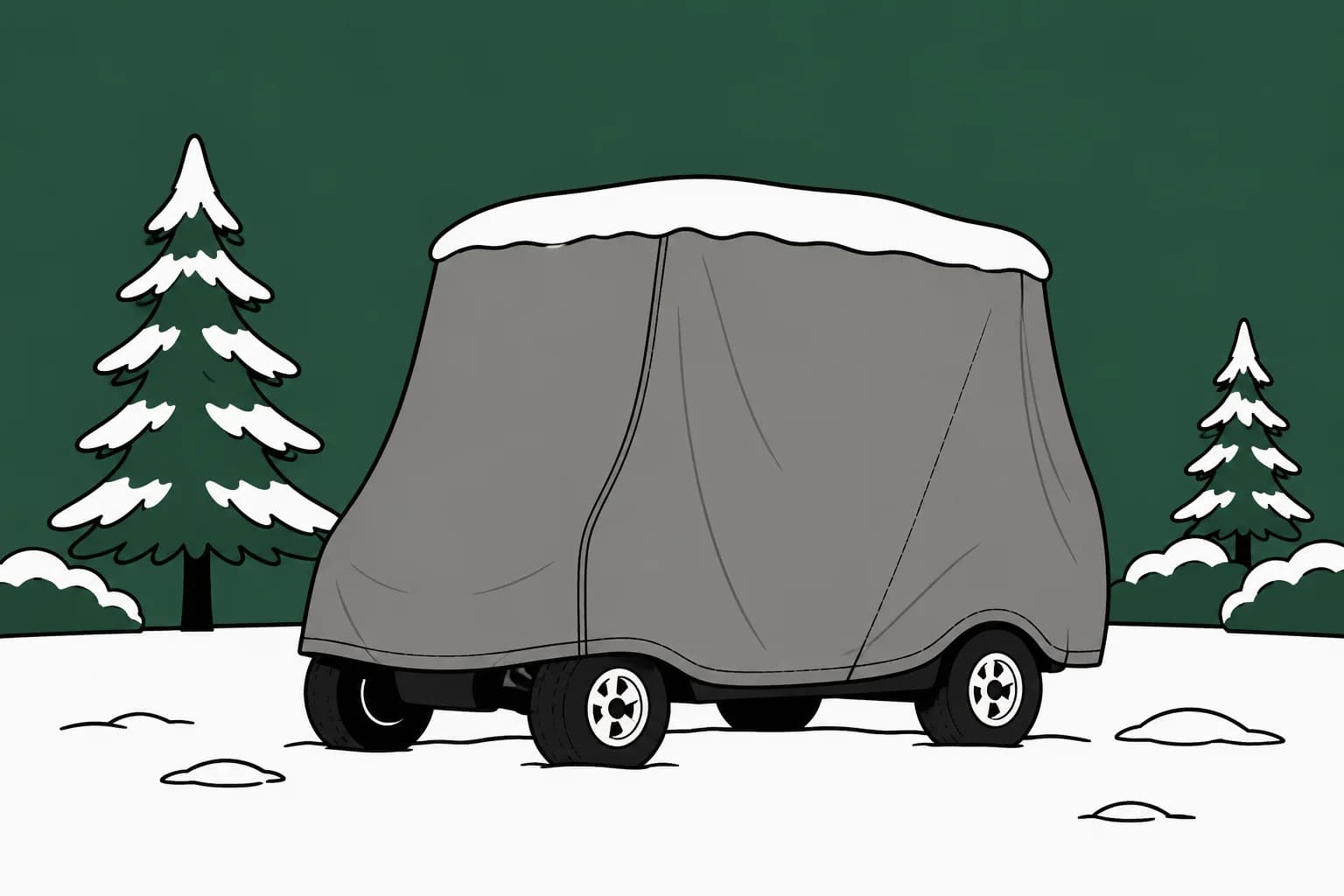
Our winters are hard on equipment. A gas cart that gets parked in October and forgotten until May will usually run again, but the ones that get put away properly start on the first crank and the ones that do not cost somebody a carburetor.
Here is what I do, and what I would tell you to do.
Fuel is the whole game
Most spring no-start calls I get on gas carts come down to fuel that sat too long. Modern pump gas with ethanol in it starts breaking down in about thirty days, and what it leaves behind is a varnish that plugs up the tiny passages in a carburetor.
A cart around here sits from roughly October to roughly April. That is six months, which is six times longer than the fuel in it stays good.
Two options, and either one works.
Stabilize it. Add a fuel stabilizer, then run the engine for ten or fifteen minutes so the treated fuel actually gets through the carburetor and not just into the tank. Filling the tank most of the way also cuts down the empty space where condensation forms.
Or drain it. Run the tank dry and shut the fuel off. This is the more thorough approach but you have to actually get the carb empty, not just the tank.
Doing neither is the option that costs money.
The battery still matters
Yes, on a gas cart. The starting battery will self discharge over a Montana winter and freeze if it gets low enough. Either pull it and keep it somewhere above freezing on a maintainer, or leave it in and put a tender on it. A frozen battery is a dead battery and the case is usually cracked by the time you find out.
Oil, and why I leave it until spring
Plenty of guides tell you to change the oil before storage. I do it in spring instead, as part of the startup service.
Oil you put in now spends six months sitting still anyway, so you have not really gained much. Changing it in spring means the cart goes into the season on clean oil. If I look after your cart seasonally, this is already on my list and you do not need to think about it.
Tires, mice and cover
Air the tires up to spec. A cart sitting all winter on soft tires will flat spot, and the sidewalls suffer.
Mice are the underrated winter enemy around here. They will build a nest in a seat, chew wiring and get into an air box. Steel wool in the exhaust outlet, dryer sheets under the seat, and a trap or two nearby are cheap insurance compared to rewiring a harness.
Cover it if you can, but leave some airflow. A tarp wrapped tight to the ground traps moisture and does more harm than leaving it uncovered.
Park it somewhere sensible
Out of the weather is better than under it. Off the dirt is better than on it. If the only option is outside, get it on a hard surface and pointed so snow slides off rather than packing into the seat.
If that sounds like a Saturday you would rather not spend
That is what the seasonal package is for. I do winterization runs across the valley through the fall, and Whitefish Lake Golf Club cart barn owners have their own package. Call me at 406.270.9346 and get on the schedule before the snow does it for you.