
A set of lead acid batteries is the most expensive single thing on most electric carts, and it is also the part people neglect the hardest. The difference between a pack that dies in three years and one that goes seven is almost entirely habits. Not luck, not brand.
Water, and only after charging
Lead acid batteries lose water through normal use. Run the plates dry and you permanently lose capacity, and no amount of watering afterward brings it back.
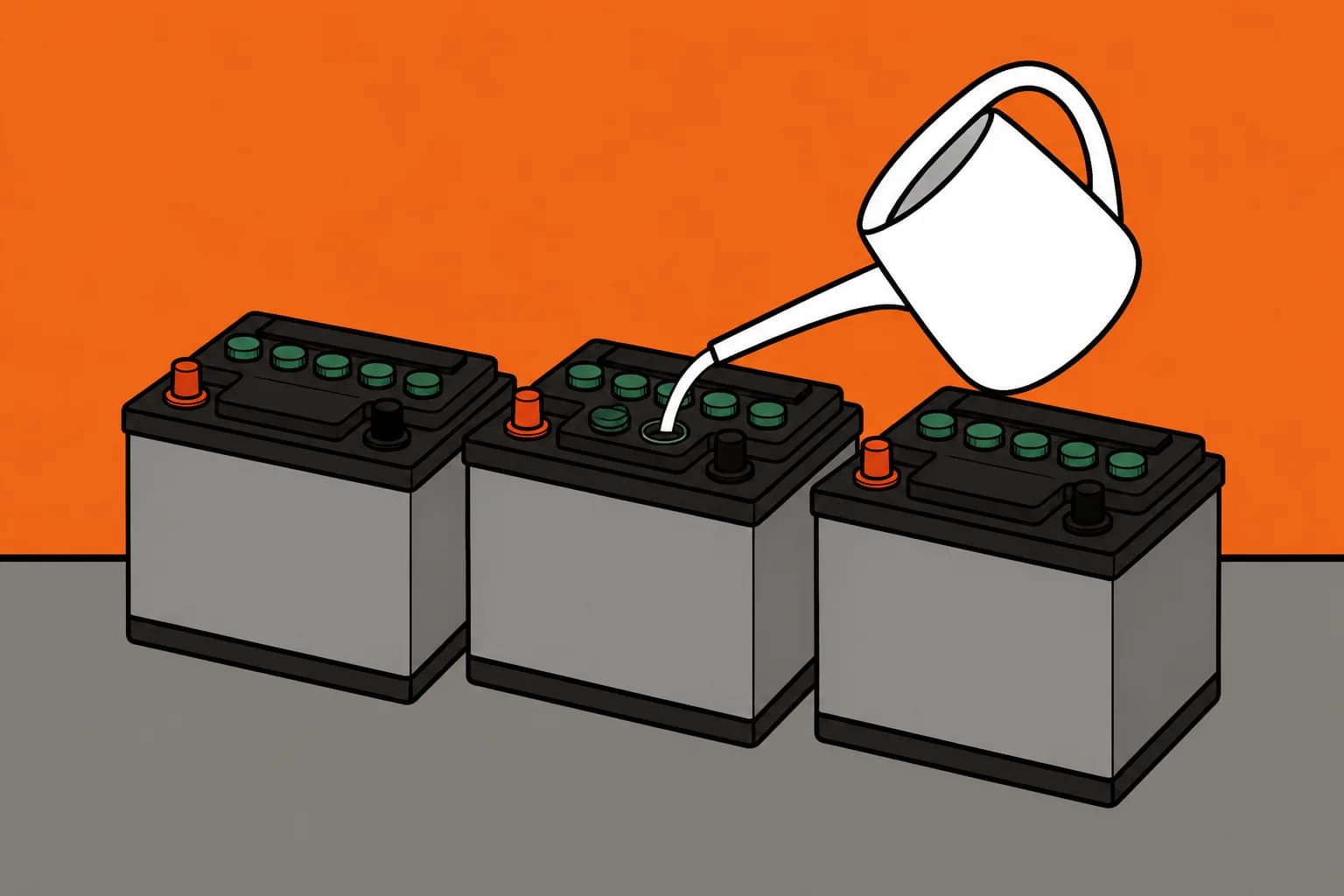
Check the levels monthly in season. After charging, the electrolyte should sit about an eighth of an inch below the bottom of the fill well, which is the little plastic tube inside the opening. The top of the plates is the minimum level, not what you are aiming for.
Two rules people get wrong:
Use distilled water only. Tap water around here carries minerals that plate out on the cells and shorten their life. A gallon of distilled costs almost nothing.
Fill after charging, never before. The electrolyte expands as it charges. Top a battery off before you charge it and it will boil acid out over the tops, which corrodes everything nearby and makes a mess you then have to clean up.
Keep the tops clean
That white or blue crust on the terminals is not cosmetic. It is a resistance path that makes the pack work harder and charge unevenly.
Baking soda and water neutralizes it. Scrub the terminals, rinse carefully without letting the solution get inside the cells, dry it, and put a light coat of terminal protectant on afterward. Twice a season is plenty.
While you are in there, check that the cables are tight. A loose connection generates heat, and heat kills batteries.
Charge it fully, every time
This is the one that quietly ruins packs. Lead acid does not like sitting partially discharged. Sulfate crystals form on the plates and harden, and eventually the capacity does not come back.
Plug it in after every use, even a short one. Let the charger finish its cycle rather than pulling it off early. And do not run the pack down past about half its capacity if you can help it. Going deeper than that regularly is the fastest way to shorten its life.
Winter
Around here that means a plan. A fully charged lead acid battery is good to about 92 below, which no Montana winter has ever come near. The same battery at around 40 percent freezes at about 16 degrees, and our average January low is just under 15. A charged pack is safe here. A half flat one is not, and a frozen one cracks. Either bring the pack somewhere above freezing, or leave it charged and reset the charger about once a month through the winter.
That monthly reset is exactly what the seasonal package covers, because it is the part people forget in February.
When it is time to stop nursing it
If the pack is over five or six years old, will not hold a charge through a normal day, or has one cell that reads noticeably lower than the rest, you are past the point where care fixes it. That is a good moment to ask whether the replacement should be lead acid again or whether lithium makes more sense for how you actually use the cart.
I am happy to test a pack and tell you honestly which side of that line you are on. 406.270.9346.