
If you own an electric cart with flooded lead acid batteries, this is the single most important thing you do for it. Get it right and a pack lasts years longer.
How often
Monthly in season is the baseline. Every two or three weeks in the heat of July and August, because heat drives water loss and a monthly schedule is not enough then.
New batteries use less water than old ones. As a pack ages, check more often.
What you need
- Distilled water. Not tap, not filtered, not bottled drinking water.
- A battery filler bottle. About ten dollars and it makes this a two minute job instead of a mess.
- Safety glasses and gloves. This is acid.
- Baking soda and water for any spills.
The three mistakes
Filling before charging instead of after. Electrolyte expands as it charges. Top a cell off beforehand and it boils acid out over the top of the battery, which then corrodes the terminals and the frame under them. Always charge first, then water.
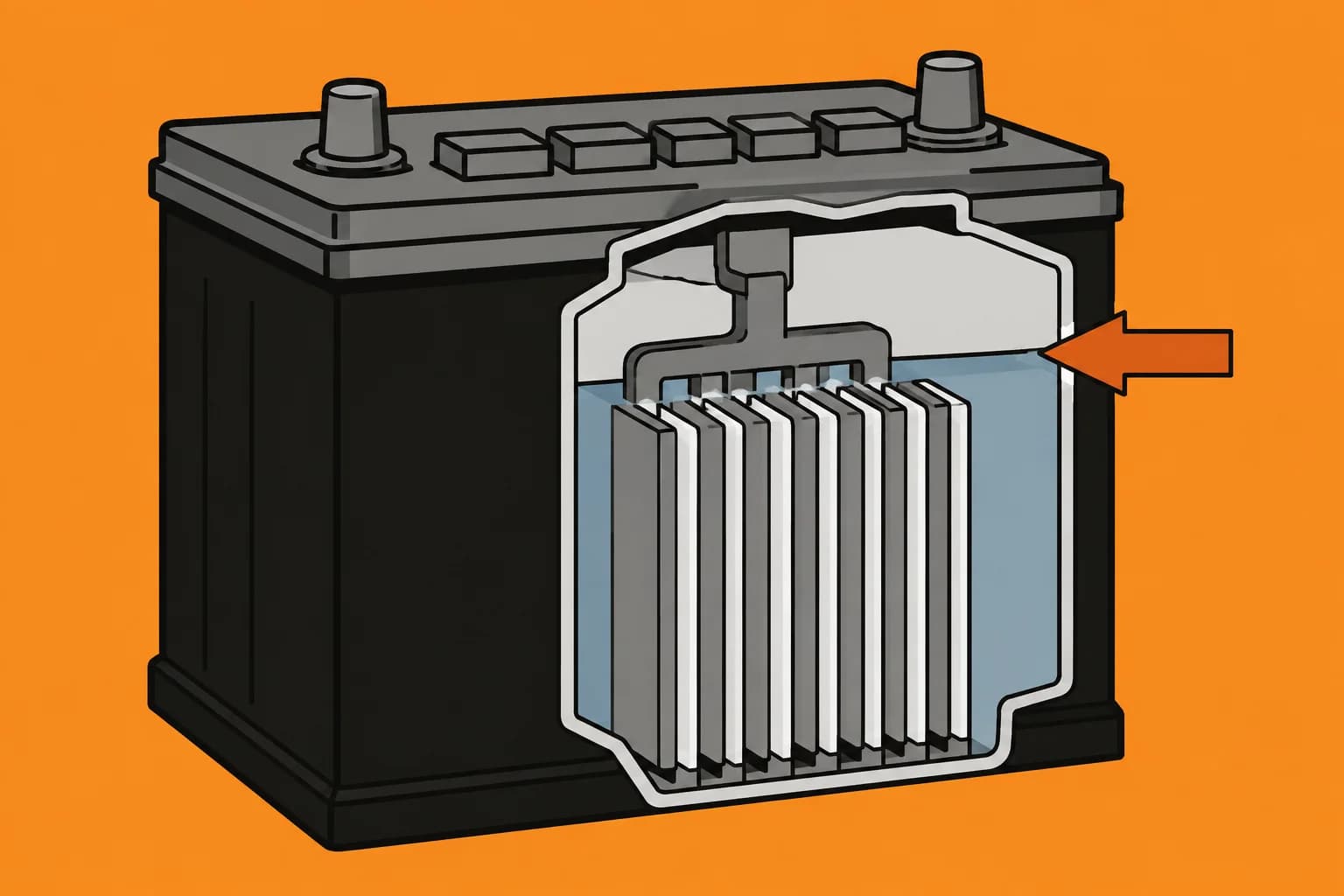
Overfilling. More is not better. After charging, the level should sit about an eighth of an inch below the bottom of the fill well, which is the little plastic tube inside the opening. Filling to the very top causes the same overflow problem.
Using tap water. The minerals in it plate out on the cells and permanently reduce capacity. A gallon of distilled costs almost nothing.
The actual process
Charge the pack fully and let it finish its cycle.
Put your glasses and gloves on.
Wipe the tops of the batteries so nothing falls into an open cell.
Open the caps. Some are individual, some are ganged in strips.
Look in each cell. The plates should be covered. The top of the plates is the minimum, not the target: if you can see the tops of the plates, that cell has already lost some capacity permanently.
If the plates are exposed, add just enough water to cover them, charge the pack, and then do the real fill in the next step. Filling a low cell all the way before charging is how you end up with acid over the top of the battery.
Fill to about an eighth of an inch below the bottom of the fill well. That is the target, not the top of the plates. A filler bottle stops automatically at the right level, which is why they are worth having.
Close the caps firmly.
Wipe the tops down. If anything spilled, neutralize with baking soda and water, then rinse carefully and dry.
What you are looking for while you are in there
A cell that always needs more water than the others is usually a cell on its way out. Worth mentioning next time somebody looks at the cart.
Heavy corrosion coming back quickly after cleaning suggests overcharging or a bad seal.
Any battery that feels hot during or after charging is a problem, not a quirk.
When watering stops being the answer
If the pack is five or six years old, will not hold a charge through a normal day, or has one cell reading noticeably lower than the rest, care is no longer the issue. That is the moment to decide between another set of lead acid or a lithium conversion.
Jared will test the pack and tell you honestly which side of that line you are on. 406.270.9346.